

History of the Suzuki Method: How Shinichi Suzuki Changed Music Education | Lakewood Suzuki Strings

Micaela Murphy • October 19, 2026

History of the Suzuki Method: How Shinichi Suzuki Changed Music Education | Lakewood Suzuki Strings

The History of the Suzuki Method

How Shinichi Suzuki Changed Music Education 

The Suzuki Method is widely recognized today as a nurturing and effective approach to music education for young children. Used around the world in studios, schools, and conservatories, the Suzuki Method has shaped generations of musicians. To fully understand its impact, it’s helpful to look at how and why the Suzuki Method first developed.


Origins in Post–War Japan

The Suzuki Method emerged in the 1940s in post–World War II Japan. During this time, the country was rebuilding not only its cities and infrastructure, but also its cultural and educational values. There was a growing emphasis on character development, discipline, and creating opportunities for children to thrive in this rapidly changing society.


It was within this context that Japanese violinist, Shinichi Suzuki, began rethinking how music could be taught to young children.

Shinichi Suzuki’s Early Life

Dr. Shinichi Suzuki was born in 1898 in Nagoya, Japan. His father owned a violin factory, and he grew up surrounded by instruments and craftsmanship. Despite this musical environment, young Shinichi Suzuki did not begin studying the violin until his late teens; a fact that would later strongly influence his ideas about learning and ability.

Because he was not considered a prodigy, Dr. Suzuki questioned the widely held belief that musical talent was something only a few were born with. Instead, Suzuki began to believe that the ability to play an instrument well could be developed through the right environment, positive encouragement, and repetition.


Education Abroad and Teaching in Japan

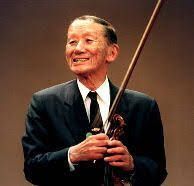
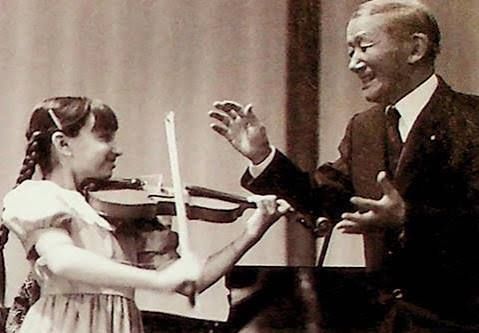
Shinichi Suzuki and his wife, Waltraud Joanne Suzuki

As a young adult, Dr. Suzuki traveled to Germany to study violin, immersing himself in Western classical music traditions. After returning to Japan, he began teaching violin to children. Through his teaching, Dr. Suzuki made observations that challenged traditional views of talent and achievement in music education.


He observed that children who were consistently supported, practiced regularly, and received encouragement at home often made steady, confident progress, regardless of whether they initially appeared to have “natural talent”. This led Dr. Suzuki to question why some children were considered naturally gifted while others were not, and why opportunities for high-quality music education were often reserved for only a select group of children.


Pictured: Shinichi Suzuki and his wife, Waltraud Joanne Suzuki
 The Development of the Suzuki Method

Over time, Dr. Suzuki’s observations led him to develop an approach to music education that emphasized early exposure, a musical environment, repetition, and encouragement. He believed that every child had the potential to succeed when musical learning took place in a supportive and nurturing setting.

This approach eventually became known as the Suzuki Method. By the 1950s, Dr. Suzuki’s ideas began gaining attention throughout Japan. In the decades that followed, the Method spread internationally, influencing music education programs, teacher training, and early childhood instruction around the world.


Lasting Impact 

Today, the Suzuki Method continues to be used globally across many instruments and age levels. Its historical roots remind us that the Method was not created as a rigid system, but as a response to a specific time, place, and belief in the potential of every child.


Understanding the history of the Suzuki Method allows us to see it not only as a teaching approach, but as a philosophy shaped by cultural rebuilding, educational curiosity, and a deep respect for how children learn.

References

Suzuki, Shinichi. Nurtured by Love. Exposition Press, 1983.

International Suzuki Association. “Shinichi Suzuki.” https://internationalsuzuki.org/shinichisuzuki

International Suzuki Association. “The Suzuki Method.” https://internationalsuzuki.org/method

Suzuki Method Association of Japan. “History of the Suzuki Method.” https://www.suzukimethod.or.jp/english/E_mthd20.html

EBSCO Research Starters. “Shinichi Suzuki.” https://www.ebsco.com/research-starters/history/shinichi-suzuki


Contact us today to schedule a trial lesson!

Contact us!

Other Blogs

Cello lesson in Lakewood Ohio with parent.
By Micaela Murphy • August 28, 2026
Discover cello lessons for 3-year-olds at Lakewood Suzuki Strings in Cleveland, Ohio. The Suzuki Method builds confidence, focus, and joy in young beginners.
Student violist performing during a music recital after preparing for a recital performance
By Micaela Murphy • March 13, 2026
Learn how to prepare for a music recital with proven Suzuki-based strategies. Build confidence, reduce nerves, and help your child perform with ease.
Cello lesson through the Suzuki Method
By Micaela Murphy • November 24, 2025
Why Choose the Suzuki Method | Suzuki Lessons Lakewood Ohio
By Micaela Murphy • August 9, 2023
In Suzuki lessons, there are three people involved in the learning process — the student, the teacher, and the parent or caregiver. The...
By Micaela Murphy • April 27, 2023
Lakewood Suzuki Spring Recital 2023!! Thanks to Shayla Tuma for these beautiful pictures. Congrats to all the students and families on a...
By Micaela Murphy • March 14, 2023
The huge and awaiting day has happened and your child is ready to get their first real violin or viola! Since every young student starts...
By Micaela Murphy • February 27, 2023
When a young child is starting their first lesson on violin or viola, you might think that the first step as the parent is to get them...
By Micaela Murphy • February 21, 2023
Regular Maintenance Your instrument will need a yearly check up from your rental shop or a trusted Luthier to ensure that there are no...